WORK / 03 / 04
GroenLinks-PvdA De Wolden
Digital campaign platform for a merged local list under election deadlines.
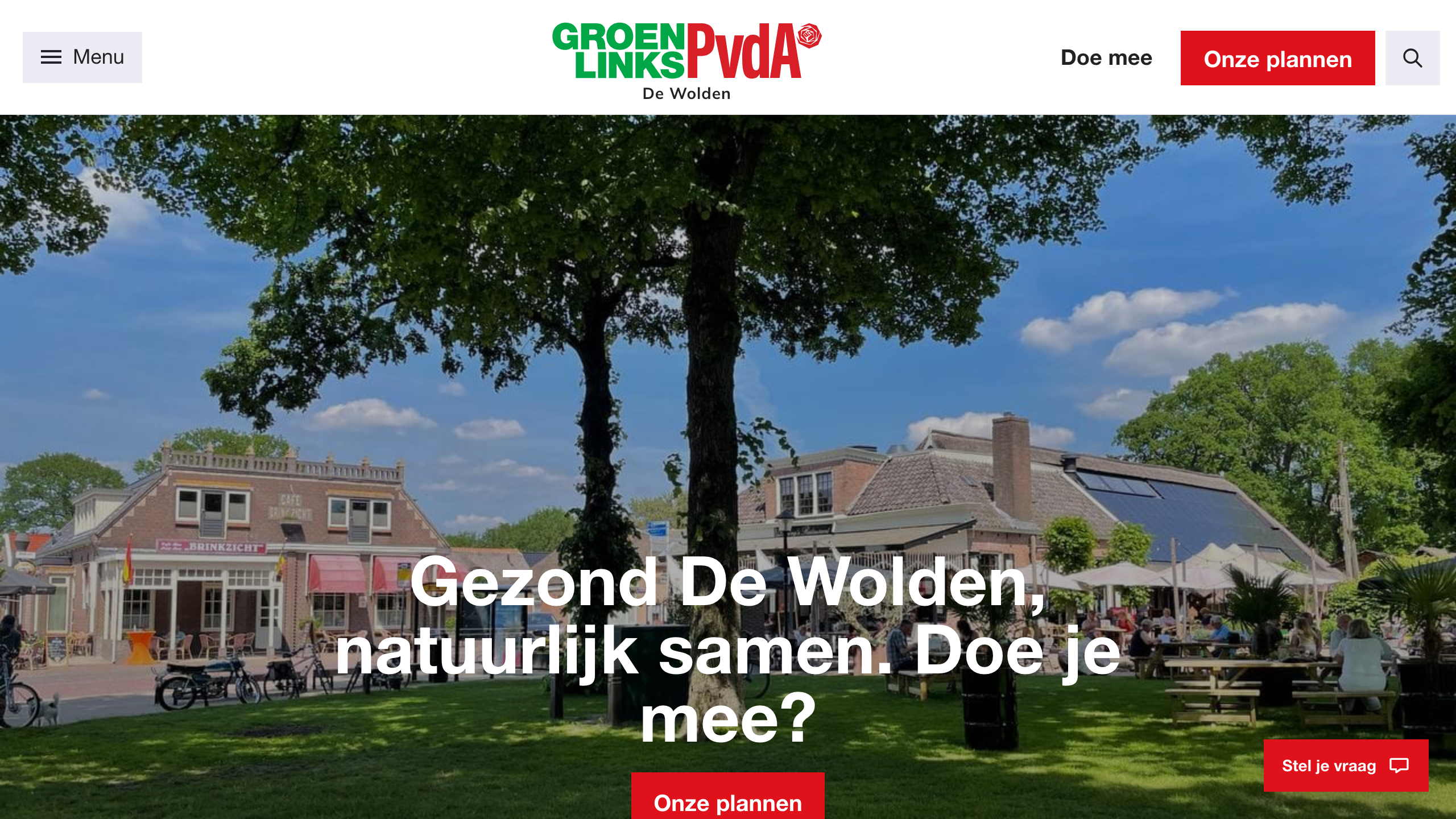
The design and behaviour of the national website were rebuilt in Ghost for the local campaign and run on our own infrastructure.
01 / Scope
A working campaign system for a joined local list.
For the first joint GroenLinks-PvdA list in De Wolden, I put a plan, a platform, and a publishing rhythm in place that volunteers and candidates could use.
The job was to make the joint list work publicly as well as organisationally.
I led the digital platform and much of the work around it: the site, hosting, documentation, chat, assistant tooling, automation, media, publishing, analytics, and weekly planning.
From 19 January 2026, the work included candidate pages, print runs, QR actions, assistant sessions, press work, and publishing on Monday and Thursday under election deadlines.
I kept planning, strategy, tooling, and reporting organised across chats, email, and working documents. The campaign site and assistant work were public throughout.
- Planning and coordination
- I wrote the campaign plan and strategy, kept the planning document current, and turned it into concrete work for the team.
- Platform and hosting
- Rebuilt the national site design and behaviour in Ghost for the local campaign, then ran the public site and supporting stack on our own infrastructure.
- Media production
- Edited photos, designed posters and sandwich boards, shot campaign videos, and handled green screen, grading, subtitling, compression, and final exports.
- Assistant and automation
- Fine-tuned and ran the campaign AI under our own control, with public programme questions, internal support, and the automation flows around both.
02 / Systems
Build the campaign system around the public site.
Alongside the website, I built the working stack for planning, documentation, assistant flows, press handling, and social distribution.
The design and behaviour of the national website were rebuilt in Ghost for the local campaign, so we could run it on our own infrastructure. Candidates, positions, news, and actions came together in one place.
The AI assistant also ran entirely under our own control. We fine-tuned the model ourselves on the local election programme and managed both the model and the infrastructure. Residents could ask it questions; behind the scenes the same environment supported the campaign team.
Ghost tags fed the Ocoya and Zammad flows for channel copy, article planning, tickets, and campaign reports.
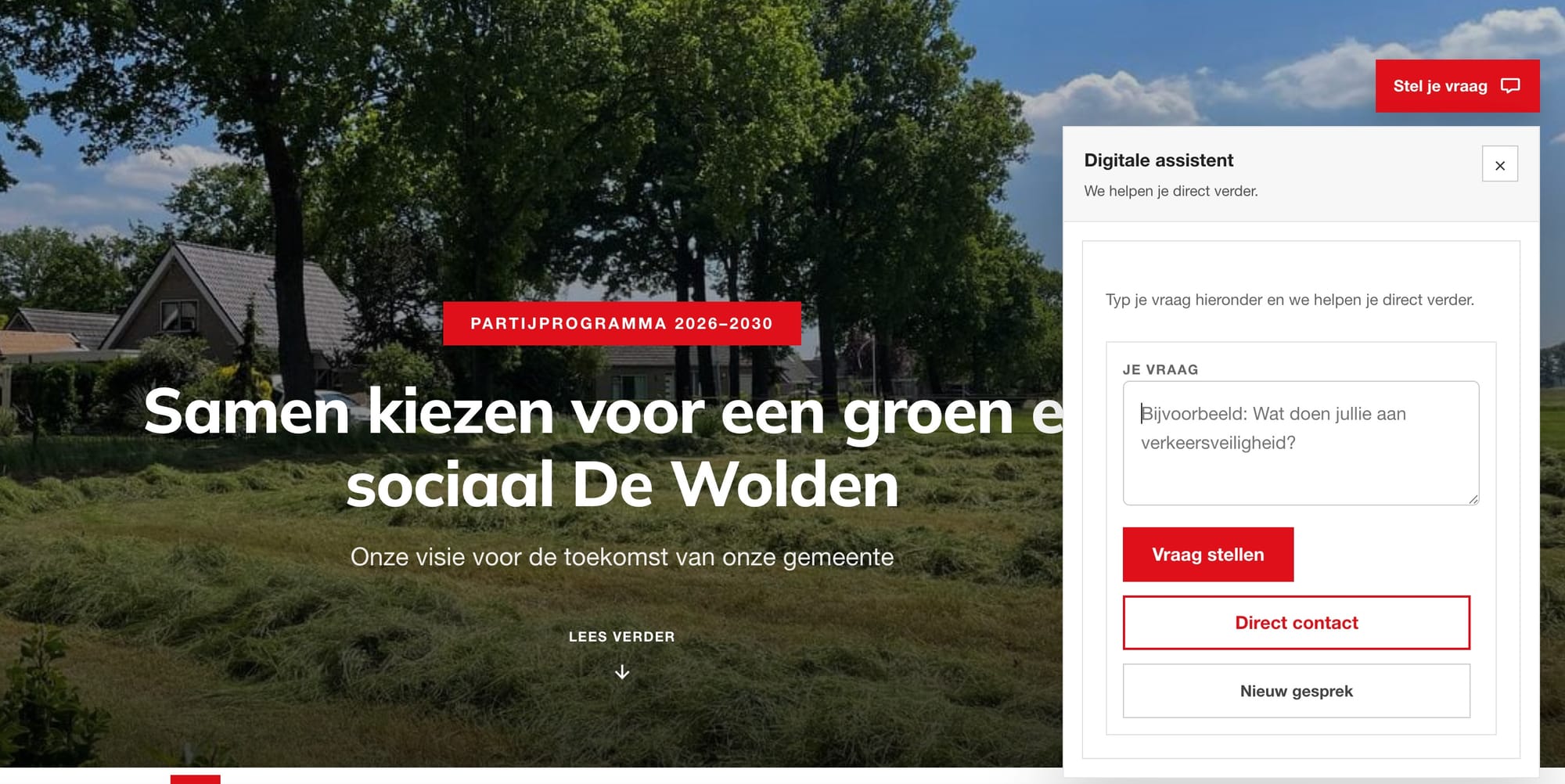
A local news site wrote about our own AI assistant, which residents could use to ask questions about the election programme.
03 / Links and articles
Links and articles from the campaign.
The campaign has a public site, an assistant article under my byline, a report from the agriculture evening, and local coverage of the chatbot.
On the campaign site, residents could read and listen to the programme. They could also ask questions through the campaign's own AI assistant.
De Wolden Nieuws described the chatbot as a first. That made GroenLinks-PvdA the first party in De Wolden with such a tool for residents who wanted to make an informed choice.
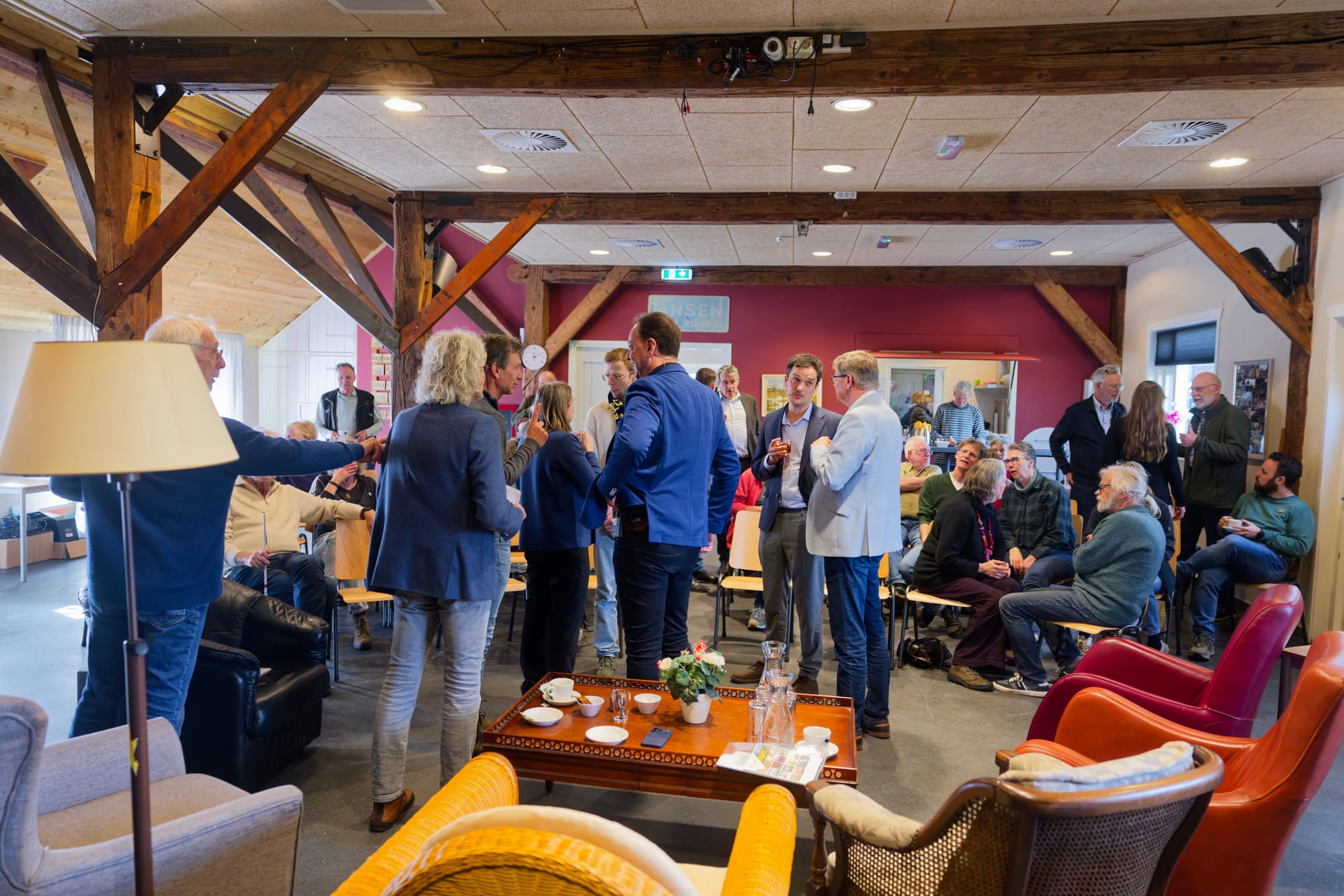
The campaign newsroom reported on the public agriculture evening in Ansen on 7 March 2026.
Read the public report
-
Public campaign platform
The public site carried the local list, people pages, news, programme material, and calls to action in one coherent campaign front end.
Open the campaign site -
Accessible election programme
The campaign article let residents read or listen to the programme and ask the locally operated assistant questions about it.
Read the assistant article -
Agriculture evening in Ansen
The campaign newsroom covered the public agriculture evening in Ansen on 7 March 2026, where the future of agriculture in De Wolden was discussed.
Read the public report -
Local coverage of the campaign assistant
Local coverage describes the chatbot as a public part of the GroenLinks-PvdA De Wolden campaign.
Read the local coverage